
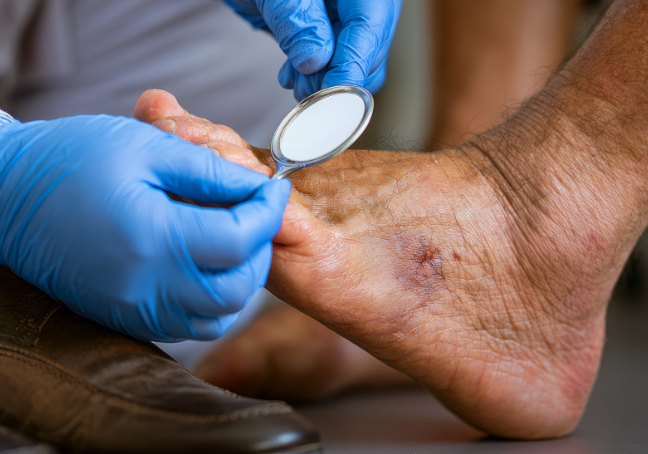
What is a Diabetic Foot Ulcer?
A diabetic foot ulcer is a sore or open wound that forms on the foot of someone with diabetes. Because diabetes can damage nerves and blood vessels, these ulcers may heal slowly. Early care for diabetic foot ulcer is important to prevent infection and other problems.
Common Symptoms
It is important to spot the signs of a diabetic foot ulcer early. This helps with quick treatment. Look for these symptoms:
However, some people may not feel pain due to nerve damage. So, regular foot checks are important.
Causes and Risk Factors
Diabetic foot ulcers often happen because of poor blood flow and nerve damage. These problems make it hard for wounds to heal. In addition, high blood sugar can slow healing and raise infection risk. Common risk factors include:
Because these risks add up, it is important to take steps to protect your feet.
Diagnosis Methods
Doctors use several ways to diagnose a diabetic foot ulcer. First, they will examine your foot and ask about your symptoms. Next, they may check for signs of infection or poor blood flow. Common diagnosis methods include:
Early diagnosis helps guide the best care for diabetic foot ulcer and can prevent serious problems.
Treatment Options (Medical and Surgical)
Treatment for diabetic foot ulcers depends on the size and depth of the wound. It also depends on whether there is infection or poor blood flow. Common treatments include:
Sometimes, surgery may be needed. For example, doctors may improve blood flow or remove infected tissue. In rare cases, part of the foot may need to be removed to stop the spread of infection.
Home Care and Daily Management
Proper home care for diabetic foot ulcers is key to healing. Here are some best practices for diabetic foot wound care at home:
Because daily care helps prevent infection, it is important to stay consistent with these steps.
Prevention Tips
Preventing diabetic foot complications is possible with good habits. Try these tips to lower your risk:
Because prevention is easier than treatment, these steps can help you avoid serious foot problems.
When to See a Doctor
It is important to see a doctor if you notice any signs of a foot ulcer. Seek help right away if you have:
Because early treatment can prevent serious complications, do not wait to get medical advice.
Conclusion
In summary, care for diabetic foot ulcer involves early detection, proper treatment, and daily foot care. While home care is important, always consult your healthcare professional for personalized advice. Your doctor can help you choose the best practices for diabetic foot wound care and prevent future problems.
For expert evaluation and comprehensive diabetic foot ulcer care, consult the specialists at Madhavanji Multi Super Speciality Hospital today.